Why People Think Grid Power (NEPA Light) Is Better — And Why They’re Wrong

Share

Blog Post by Ayoola Falola in

For many Nigerians, there is a widely held belief that 'there's nothing like NEPA light.' You hear it in many situations. When someone installs a solar inverter system and the inverter ...

For many Nigerians, there is a widely held belief that 'there's nothing like NEPA light.' You hear it in many situations. When someone installs a solar inverter system and the inverter shuts down, someone quickly says, 'If it was NEPA light, this wouldn't happen.' When someone buys a new phone or power bank, the seller may advise them to charge it first with NEPA light.

Over time, statements like these have created the impression that electricity from the national grid is somehow stronger, purer, or more reliable than electricity from solar systems, inverters, or batteries.

But most of these beliefs are based on misunderstanding how electricity actually works.

Electricity is governed by physical principles. Once the electrical properties are the same, electricity from different sources becomes practically indistinguishable.

The power produced by a properly designed inverter system can be exactly the same as grid electricity, and in some situations even more stable.

So why do people still believe grid power is inherently better?

In most cases, the answer is limited knowledge about how electric power systems operate.

To understand this properly, we need to start with the basics.

Think of this as Electric Power 101.

In Nigeria, electricity from the national grid is commonly called 'NEPA light,' a name that originated from the former government power authority known as the National Electric Power Authority (NEPA). Even though the organization has since been replaced, the name has remained part of everyday language.

Types of Electricity

Electricity can generally be classified into two main categories:

Static electricity and dynamic electricity.

Static electricity refers to the buildup of electric charge on a surface. Lightning is a common example.

Dynamic electricity—also known as current electricity—is the continuous flow of electrons through a conductor. This is the type of electricity that powers homes, appliances, and electronic devices.

For practical purposes, this is the form of electricity that concerns us.

Dynamic electricity can further be divided into two types.

Direct Current (DC)

In direct current, electrons flow in one consistent direction. This type of electricity is produced by batteries, solar panels, and most electronic power sources. Devices such as phones, laptops, and power banks ultimately run internally on DC electricity.

Alternating Current (AC)

In alternating current, the direction of electron flow periodically reverses in a wave-like pattern. This is the type of electricity used in household power systems, industrial equipment, and long-distance power transmission. In Nigeria, household electricity typically operates around 220-240 volts with a frequency of 50Hz.

The Basic Properties of Electricity

Regardless of where electricity comes from, it always has certain fundamental properties. Understanding these properties explains why electricity from different sources can be identical in quality.

Voltage

Voltage describes the electrical pressure that pushes electrons through a circuit. A simple analogy is water pressure in a tank. Higher pressure pushes water through pipes more forcefully. Similarly, higher voltage pushes electrons through wires with greater force.

Current

Current measures the rate of flow of electrons through a circuit. Continuing with the water analogy, current is similar to the size of the pipe carrying water. A larger pipe allows more water to flow. Current determines how much electrical energy flows to a device at any given moment.

Frequency

Frequency applies only to alternating current. It describes how many times the current changes direction per second. In Nigeria, the standard frequency is 50 cycles per second (50Hz). If electricity from two different sources has the same voltage, adequate current capacity, and the same frequency, then devices using that electricity cannot tell the difference.

Every Power Source Has Limits

One important fact about electricity is that every power system has limits. Even the national grid has limits. This is why the power industry talks about things like:

  • generation capacity
  • transmission capacity
  • distribution capacity

Generation capacity refers to how much electricity power plants can produce. Transmission capacity refers to how much electricity can be transported across long-distance power lines. Distribution capacity refers to how much electricity can be delivered to homes and businesses. Because the grid's capacity is usually much larger than the needs of an individual household, many people assume grid power is unlimited. But in reality, it is not.

Why Nigeria Experiences Blackouts

Many of the power outages experienced in Nigeria are simply due to capacity limits. The total electricity available at a given time may be smaller than the total demand from homes, businesses, and industries. When this happens, electricity must be shared or rationed between different areas so that limited supply can serve more people. In other words, the grid manages its own limitations by distributing available power across millions of users.

The Truth About Electricity Sources

Once electricity meets the correct electrical standards—voltage, frequency, and waveform—it becomes effectively identical regardless of the source. It does not matter whether electricity is coming from:

  • the national grid
  • a generator
  • a solar inverter
  • a battery system

Modern inverter systems are designed specifically to match grid standards. They generate alternating current that closely replicates the voltage, frequency, and waveform produced by the grid. From the perspective of most appliances, the electricity is essentially the same.

The Limitations of Generators

Many households use petrol or diesel generators as backup power sources. While generators are useful, they also have limitations. First, many small generators struggle to maintain stable voltage and frequency over long periods, especially as they age or operate under varying loads.

Second, generators often continue running even during overload conditions. When this happens, voltage may drop while current rises, which can lead to overheating, equipment damage, or electrical hazards.

Inverter systems behave differently.

Most inverters automatically shut down during overload conditions. Although this may appear inconvenient, it is actually a protective feature. Instead of supplying unstable electricity that could damage appliances, the system stops operating until the load returns to a safe level.

The Limits of Solar Inverter Systems

Solar inverter systems, like all power systems, also have limits.

These limits usually fall into three categories.

Generation Limit

This refers to the amount of electricity your solar panels can produce. Ideally, generation capacity should be sized so that the system produces enough energy during daylight hours to meet daily needs.

Inverter Limit

This refers to the maximum power the inverter can deliver at any given moment. It determines which appliances can run simultaneously. If total demand exceeds this limit, the inverter shuts down to protect the system.

Backup Limit

This refers to battery storage capacity. Battery capacity determines how long your system can continue supplying electricity when generation stops, such as at night or during cloudy conditions. Battery capacity is typically measured in kilowatt-hours (kWh).

Why Solar Users Sometimes Manage Power

Some people wonder why solar users still manage their electricity usage even after investing heavily in their systems. The reason is simple. Power management occurs whenever resources are limited. Even people with reliable grid electricity often manage power because of electricity costs. When bills become expensive, people naturally begin turning off appliances that are not needed.

Solar users face a similar situation.

A system large enough to eliminate all limitations may be expensive to install. As a result, many people build systems that meet most of their needs and manage usage when necessary. In many cases, the issue is not the technology—it is simply budget constraints.

How to Manage a Solar Power System Effectively

Effective power management begins with understanding your system.

  1. First, know your system's limits. This includes generation capacity, inverter capacity, and battery storage.
  2. Second, conduct an appliance audit. Determine how much electricity each appliance consumes and whether your system can support them at the same time.
  3. Third, measure everything. Monitoring generation, usage, and battery levels helps you understand how your system behaves and where improvements may be needed.

Good measurement leads to good management.

Final Thoughts

Electricity, at its core, is simply energy moving through a circuit. Once the voltage, current capacity, frequency, and waveform are within the correct range, the source of the electricity becomes irrelevant to the devices using it. Your television, refrigerator, laptop, and phone charger cannot tell whether their electricity is coming from the national grid, a solar inverter, or a generator.

They only respond to electrical properties.

The belief that grid power—or 'NEPA light'—is inherently better is largely based on perception rather than physics. The grid appears powerful because it operates at a large scale and usually has higher capacity than individual household systems. But the same principles apply to all power systems.

When you install a solar inverter system, you are essentially becoming your own electricity provider. You gain independence and reliability, but you also take on the responsibility of managing your own energy system.

So the next time someone says 'there's nothing like NEPA light,' remember this: The electricity itself is not special. What truly matters is how well the power system producing that electricity is designed and managed.
 

View 63 0
1 wk ago

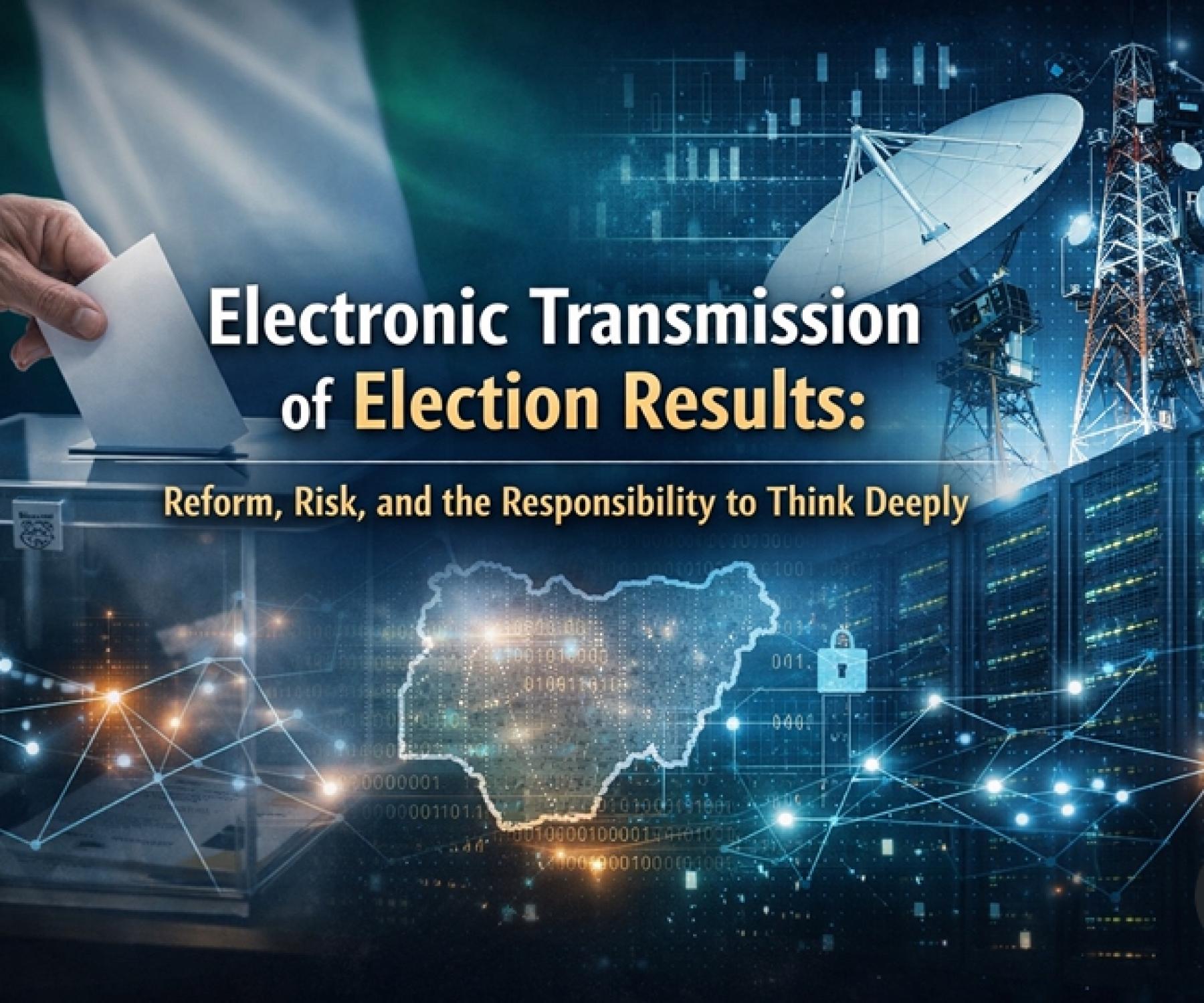
Electronic Transmission of Election Results: Reform, Risk, and the Responsibility to Think Deeply

Share

Blog Post by Ayoola Falola in Software Technology , Technology , Cyber Security , Governance

Let me begin by stating this clearly: I am not against electronic transfer of election results. What I find troubling is that many of those loudly clamouring for it do not fully understand wh...

Let me begin by stating this clearly:

I am not against electronic transfer of election results.

What I find troubling is that many of those loudly clamouring for it do not fully understand what they are actually demanding.

What you are asking for is not merely electronic transfer of results.

You are asking for internet-powered electronic transmission of election results, coordinated technologically and procedurally by INEC through platforms like IREV and BVAS.

That distinction matters.

Some days ago, someone challenged me on why I keep making this clarification. I gave an analogy: the clamour for electronic transmission reminds me of the clamour for the return of petrol subsidy. Many people demanded it passionately without fully understanding the structural and economic implications.

So I asked my usual "weeding questions" — questions designed to test whether we truly understand what we are advocating for.

Most of those questions were either unanswered or poorly addressed.

Let me ask them openly here. Hopefully, they will guide us toward knowledge rather than emotion.

Foundational Questions

  1. Do you understand the importance of elections?
    Do you know that problems during elections can trigger a constitutional crisis — leading to chaos or a vacuum in leadership?
  2. Do you know what a constitutional crisis is?
    And do you understand the damage such a crisis can inflict on the stability of a nation?
  3. Do you understand that one of the core responsibilities of legislators is to prevent constitutional crises?
    Laws must employ checks and balances. They must be justiciable. They must anticipate failure points.
  4. Do you understand the existing system well enough to explain it to a five-year-old?
    Can you clearly outline its checks and balances? Its merits and its demerits?
  5. Do you understand the new system being proposed?
    Can you outline its merits and demerits with the same clarity?
  6. Can you confidently say the new system solves all the challenges of the existing system?
  7. Are you certain the new system will not introduce new, untested problems — problems for which adequate safeguards do not yet exist?

These are not partisan questions. They are governance questions.

The Technical Questions (For the Tech Bros and Sisters)

Let us go deeper.

  1. Do you know what a Denial of Service (DoS) or Distributed Denial of Service (DDoS) attack is?
    If electronic transmission becomes mandatory and such an attack succeeds, attackers could potentially disrupt or invalidate election results.
  2. Do you understand that shifting to electronic transmission does not eliminate critical infrastructure risks — it merely changes them?
    Instead of protecting ballot boxes, you now must protect:
    • BVAS/IREV machines
    • Telecom masts
    • Fibre optic cables
    • Base stations
    • Satellite systems
    • Power sources
  3. An attack on any one critical telecom infrastructure could compromise result transmission.
  4. Do you understand that electronic transmission would make Nigeria dependent on server and internet infrastructure that may not reside within our jurisdiction?
    Do you understand what that implies for national security?
  5. Do you know that electronic results can still be manipulated?
    Manipation can potentially occur at multiple levels:
  • Polling unit level
  • Man-in-the-middle level
  • Telecom provider level
  • Developer level
  • Admin user level
  • Hosting provider level

I can identify at least seven possible points of compromise.

Now, if such manipulation occurs, what mechanisms exist for redress — especially if manual records have been discarded?

Some say, "We will do forensic analysis."

I laugh in Spanish.

A Necessary Clarification: Not All Electronic Transmission Is Internet-Based

It is important to clarify something many people overlook.

Electronic transmission is not synonymous with internet-based transmission.

There are multiple forms of electronic transmission that do not depend on the public internet. For example:

  • Closed-circuit transmission over dedicated private networks
  • Satellite-based point-to-point systems not exposed to open internet routing
  • Encrypted offline uploads transferred through controlled physical relays
  • Secure intranet systems isolated from the global web
  • Air-gapped systems where data is electronically captured but not transmitted over the internet

These are all electronic systems.

The moment you introduce the open internet into the equation, the game changes.

The internet is not a neutral infrastructure. It is a globally interconnected environment with multiple routing points, third-party dependencies, foreign-controlled backbone infrastructure, and countless potential attack surfaces. Once election transmission depends on it, you are no longer dealing with just electoral procedure — you are dealing with cybersecurity warfare, telecom sovereignty, cross-border data jurisdiction, cloud hosting exposure, and critical infrastructure vulnerability.

That is not a small shift.

It transforms elections from a primarily physical security challenge into a hybrid physical-digital national security operation.

And national security systems must be engineered with extreme caution.

The Legislative Responsibility

Legislation, especially legislation governing elections, must anticipate worst-case scenarios — not best-case optimism.

Laws should not be passed based on political excitement or public pressure. They must be stress-tested intellectually before they are stress-tested nationally.

Once you legislate a mandatory internet-based transmission system, you are locking the nation into a technological dependency model that may:

  • Rely on infrastructure outside national jurisdiction
  • Be vulnerable to sophisticated cyber attacks
  • Introduce systemic failure points that could invalidate entire elections
  • Create new forms of constitutional crisis that current frameworks were not designed to handle

And remember: elections are not beta software releases.

You do not get to "patch" a constitutional vacuum in real time.

The Real Issue

I actually have 21 questions, but I will limit public discourse to these for now.

Anyone who can answer these questions honestly will likely conclude that the debate should not be framed as:

"Electronic transmission or nothing."

Rather, the responsible approach is this:

Electronic transmission in conjunction with the existing system.

Use it. Test it. Stress it. Improve it. Build safeguards around it. Identify its weaknesses over multiple election cycles.

That is how mature democracies adopt critical infrastructure technology.

Blind absolutism is not reform.

Careful, iterative improvement is.

If we truly care about elections, national stability, and constitutional continuity, then our advocacy must be rooted in knowledge, not slogans.

Democracy is too important to be redesigned on the basis of excitement.

If reform is necessary, let it be intelligent reform — grounded in technical understanding, constitutional awareness, and national security foresight.

Anything less would be reckless.


View 264 0
1 month ago

Border Security as National Infrastructure: A Presidential Perspective

Share

Blog Post by Ayoola Falola in Technology , Governance

As Nigeria looks toward the future, we must move beyond emotional debates and fashionable buzzwords and begin to speak seriously about statecraft, sovereignty, and security. Security is not...

As Nigeria looks toward the future, we must move beyond emotional debates and fashionable buzzwords and begin to speak seriously about statecraft, sovereignty, and security.

Security is not built on opinions. It is built on tested principles, layered systems, and realities on the ground. One of those realities is this: no serious nation secures its territory without first controlling physical access to it.

This is the context in which border fencing must be understood.


This Is Not Fence Versus Technology

Let me be clear: this is not a debate between concrete and computers.

Every effective national security system in the world operates on a layered model:

  1. Physical control of space

  2. Human presence and patrol

  3. Intelligence and surveillance

  4. Technology-enabled monitoring

  5. Rapid response

A fence is not the end of security. It is the beginning of order.

Without physical boundaries, technology is stretched thin, expensive, unreliable, and ultimately ineffective. With boundaries in place, technology becomes focused, efficient, and affordable.


What Serious Nations Do

Across the world, nations do not fence borders randomly. They do so selectively, based on experience, threat assessment, and long-term national interest. This is not ideology; it is strategy.

When a neighboring country presents sustained security, economic, or ideological risk, states respond by hardening borders. In plain terms, nations build walls where neighbors are high-risk.

Consider the following examples:

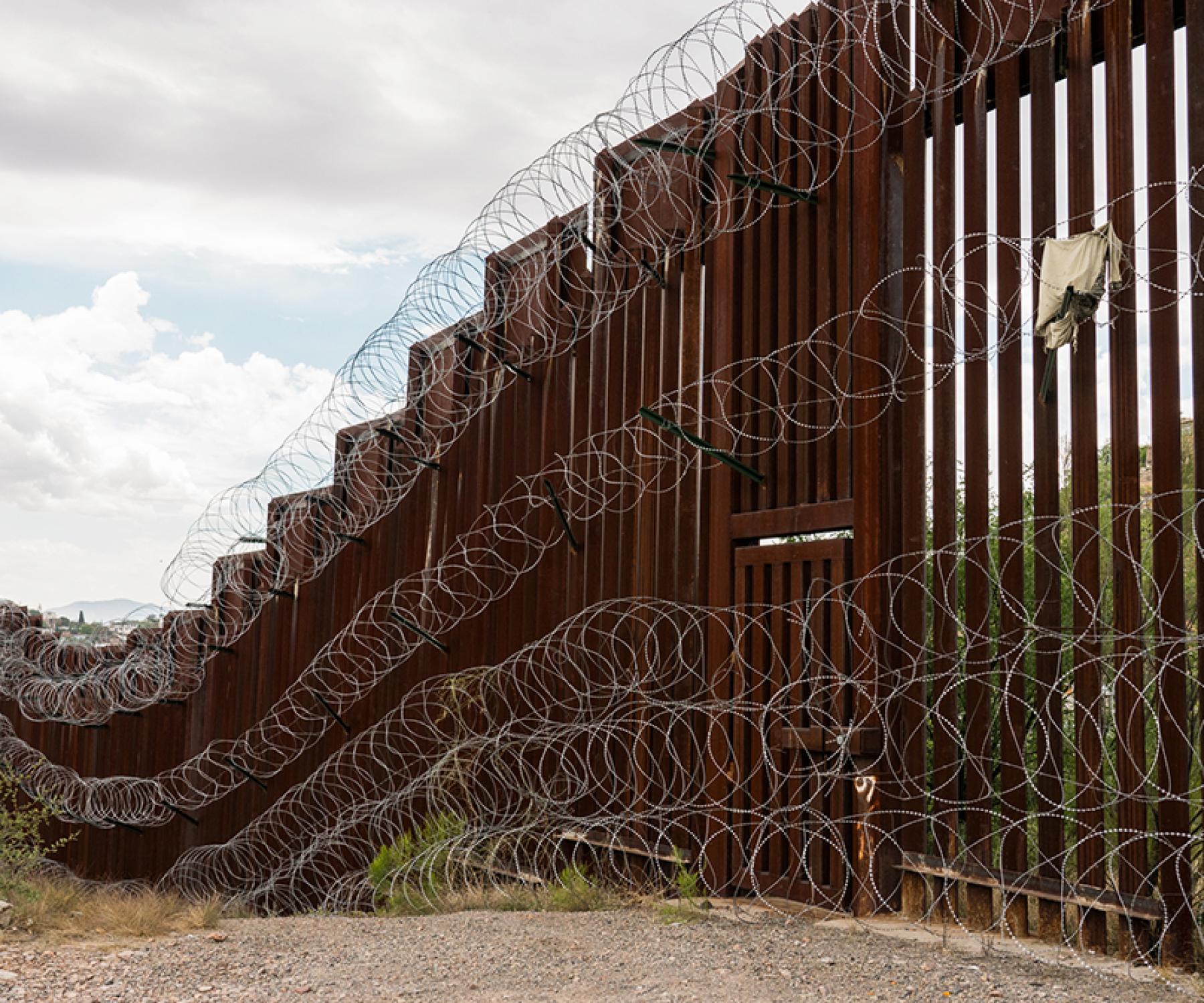
  • United States - Mexico: The primary drivers are persistent illegal migration pressure, drug trafficking, and large-scale smuggling networks. Despite advanced surveillance technology, physical barriers remain necessary to slow, channel, and manage cross-border movement.

  • Israel - Gaza: This is driven by clear ideological hostility and the presence of armed non-state actors committed to Israel's destruction. Physical barriers are combined with surveillance and rapid-response systems to prevent infiltration and attacks.

  • India - Pakistan: A long history of security threats, ideological conflict, and cross-border militancy led India to fence significant portions of this border to reduce infiltration and control movement.

  • Saudi Arabia - Yemen: Prolonged instability, armed groups, and weapons smuggling across porous terrain made a fortified border essential for Saudi national security.

  • Finland - Russia: The concern here is not daily crime but geopolitical risk, state-level unpredictability, and the potential use of migration or pressure tactics during periods of heightened tension.

  • Poland - Belarus: This border was hardened in response to the deliberate weaponization of migration, where human movement was used as a political and security tool against the Polish state.

These examples demonstrate a consistent global pattern: walls are built not because neighbors are disliked, but because risk is persistent.

Where borders are open—such as between the United States and Canada, or among many Western European states—it is because neighbors share comparable economic conditions, aligned security frameworks, and mutual enforcement capacity.

Open borders are therefore not a moral statement. They are a calculated assessment of risk.


The Same Logic Nigerians Practice Every Day

There is not a single successful Nigerian—industrialist, investor, or professional—who builds a home without:

  • A perimeter fence

  • A controlled gate

  • Defined entry points

This is not because modern alarms, cameras, or smart systems do not exist. It is because physical barriers remain the most affordable and reliable first layer of security.

What works for a home works for a nation—only at scale.


Affordability and Reliability Are National Priorities

A responsible government does not design security systems based on what sounds impressive. It designs them based on what works consistently.

Much of Nigeria's border runs through forests, deserts, and remote terrain where:

  • Power supply is unstable

  • Internet connectivity is unreliable

  • Maintenance capacity is limited

A physical fence:

  • Does not require electricity

  • Does not depend on bandwidth

  • Functions day and night

  • Immediately alters behavior by restricting uncontrolled movement

Technology is essential—but technology must rest on infrastructure that does not fail when conditions are harsh.


One Decision, Multiple National Gains

Border fencing is not only about terrorism.

When properly implemented, it strengthens the state by:

  • Reducing arms and drug trafficking

  • Curbing illegal migration

  • Limiting smuggling of goods

  • Improving customs enforcement

  • Enhancing national revenue

  • Reasserting territorial sovereignty

It channels movement to lawful entry points—where documentation, surveillance, and enforcement can work as designed.


Respect for Expertise

Nation-building requires humility.

Security professionals, career military officers, and border experts do not advocate physical barriers because they lack exposure to modern technology. They advocate them because they understand a simple truth:

A nation cannot secure what it does not physically control.

Criticism is welcome in a democracy. But dismissing proven infrastructure without proposing a guaranteed, affordable, and reliable alternative is not policy—it is speculation.


The Position of Leadership

Border fencing is not a silver bullet, and no responsible leader claims it is.

But rejecting it outright is not progressive thinking. It is foundational blindness.

A secure Nigeria will be built on:

  • Clear physical boundaries

  • Trained personnel

  • Intelligence-led operations

  • Appropriate technology

  • Strong regional diplomacy

Technology must sit on top of structure, not attempt to replace it.


Conclusion

Leadership is not about appearing advanced. It is about making decisions that work—today and decades from now.

A secure Nigeria begins with controlled borders. From there, everything else becomes possible.

View 312 0
2 months ago

Gallery Item 80

Share

Gallery Item by Ayoola Falola in

Gallery Item

Gallery Item

View 148 0
3 months ago

Gallery Item 79

Share

Gallery Item by Ayoola Falola in

Gallery Item

Gallery Item

View 141 0
3 months ago

Gallery Item 78

Share

Gallery Item by Ayoola Falola in

Gallery Item

Gallery Item

View 155 0
3 months ago
Next →